
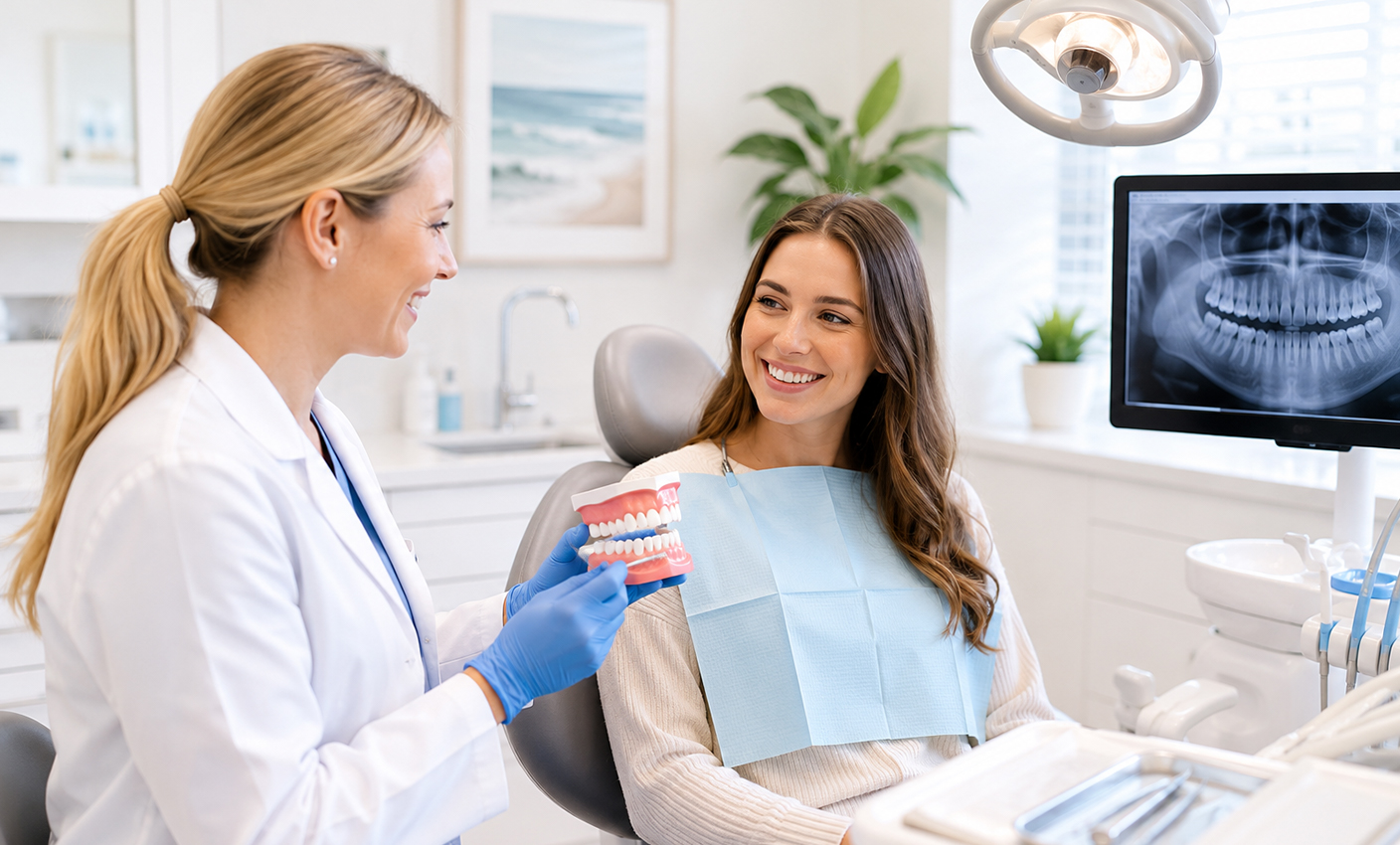
Affordable Dental Care Vestal NY — Compassionate, Modern Services for Families and Seniors
You want affordable, quality dental care in Vestal and you deserve clear, practical guidance to find it. This article explains how local clinics, insurance options, and modern treatment choices can lower costs while keeping comfort and results high. Expect concrete steps for finding budget-friendly dentists, understanding payment plans, and keeping dental bills down through prevention.
They will walk through why regular visits save money long term, what affordable treatments look like in Vestal, and how to use insurance or sliding-scale options to your advantage. Follow the tips and next steps to feel confident about scheduling care and protecting your smile.
Understanding the Importance of Regular Dental Visits
Regular dental visits keep teeth healthy, catch problems early, and reduce future costs. They also help patients maintain comfort, preserve natural teeth, and choose the right preventive treatments.
How Preventive Care Lowers Overall Costs
Preventive care — routine exams, cleanings, and X-rays — limits the need for expensive procedures later. A professional cleaning every six months removes plaque and tartar that at-home care misses, lowering the risk of cavities and gum disease that can require fillings, root canals, or extractions.
Insurance usually covers preventive visits at low or no cost, so scheduling them reduces out-of-pocket spending over time. Early detection during an exam often means simpler, less costly treatments: a small cavity becomes a filling, not a crown or root canal. Fluoride treatments and sealants further reduce decay risk for patients of all ages.
Consistent preventive visits also reduce emergency appointments, which often carry higher fees and more complex care. For those on tight budgets, clinics offering sliding-scale fees or payment plans can make regular prevention affordable and predictable.
Common Oral Health Issues Addressed Early
Dentists commonly identify cavities, gum inflammation (gingivitis), and minor enamel wear during routine checkups. Treating gingivitis early through scaling, improved home care, and targeted cleanings prevents progression to periodontitis, which can cause tooth loss and require deep cleaning or surgery.
Routine X-rays detect hidden problems such as impacted teeth, early bone loss, and decay between teeth. Detecting these issues early enables conservative treatments like small fillings or localized periodontal therapy instead of extractions, implants, or bone grafts.
Dentists also screen for oral cancer, TMJ problems, and wear from bruxism (teeth grinding). Early management—night guards, targeted counseling, or minor restorative work—reduces pain and preserves dental structure, keeping long-term treatment simpler and less expensive.
Long-Term Savings Through Routine Checkups
Patients who keep regular checkups reduce the likelihood of complex restorative work, which carries higher material and lab costs. For example, a filling typically costs a fraction of a crown or implant; preventing the need for crowns by addressing decay early saves substantial money over a lifetime.
Consistent professional care preserves the natural tooth structure, avoiding replacement options that accumulate cost and maintenance. Preventive habits reinforced by dental visits—such as proper brushing technique, flossing, and dietary adjustments—lower ongoing treatment needs and related expenses.
Many practices in Vestal, NY, offer membership plans or payment options to spread preventive care costs across the year. Patients who use these plans often report fewer emergency visits and lower annual dental spending, making routine checkups a financially prudent choice.
Affordable Treatment Options in Vestal
Patients find practical ways to keep dental care within budget while preserving quality and comfort. The following entries describe common low-cost services, material choices, and payment options to help people make informed decisions at local practices.
Budget-Friendly Cleanings and Exams
Many Vestal clinics offer basic prophylaxis and exams priced between $50–$120 for uninsured adults, with lower rates for children and seniors. Community health centers sometimes provide sliding-scale fees based on income, so bringing proof of household earnings can reduce the cost significantly.
Dental hygiene visits typically include a visual exam, teeth cleaning, and oral health education. Practices often pair X-rays with exams; ask which specific radiographs are recommended and whether bundle pricing applies. Preventive care done regularly prevents more costly treatment later, so scheduling routine six-month visits can save money over time.
Look for weekday morning slots or dental hygiene student clinics that discount cleanings. Many offices post fees online; calling to confirm exact charges and available discounts avoids surprise bills.
Accessible Solutions for Fillings and Restorations
For small to moderate cavities, composite (tooth‑colored) fillings usually cost more than amalgam but blend with teeth and are common in Vestal practices. Some clinics still offer amalgam for lower cost; patients should ask about durability, appearance, and any material concerns before deciding.
When larger restorations are needed, dentists may recommend onlays or crowns. Economical crown options include porcelain-fused-to-metal and zirconia; lab fees and material choice affect price. Practices often present a written estimate that breaks down tooth prep, temporary crown, lab fee, and final placement—request this to compare offers.
For patients facing multiple restorations, dentists sometimes stage treatment over several visits to spread costs. In addition, community dental programs occasionally provide limited restorative care at reduced fees for qualifying residents.
Flexible Payment Choices for More Advanced Procedures
Local dental offices commonly accept major insurance plans, which can cover a portion of restorative and periodontal procedures after deductibles and annual limits. Patients should verify coverage percentages for specific codes like D2391 (sedative filling) or D2752 (porcelain fused to metal crown).
Many practices offer in-house payment plans permitting equal monthly installments with no interest for short terms. Third-party financing (CareCredit or similar) provides promotional low- or no-interest periods for 6–24 months; applicants should compare deferred-interest terms and fees.
Dentists often provide a written estimate and treatment plan that lists total cost, insurance estimate, and patient portion. Bringing recent insurance explanation-of-benefits and asking for preauthorization reduces unexpected charges and speeds approval for major work.
Insurance and Payment Plans Explained
Patients often worry about coverage, out-of-pocket costs, and how to pay for necessary care. This section explains how local insurance works, discount membership options, and practical payment arrangements to make treatment affordable.
Working with Dental Insurance in Vestal
Most Vestal dentists accept major PPO plans like Delta Dental, Cigna, MetLife, and Guardian. They verify benefits before treatment, estimate patient responsibility, and submit claims electronically to speed reimbursement.
Patients should bring their insurance card and a photo ID to the first visit. The office will check deductibles, annual maximums, waiting periods, and whether specific procedures require preauthorization.
Out-of-network care remains an option if a preferred provider is not in-network. In that case, the practice often provides a pre-treatment estimate showing the total fee, the insurer’s estimated payment, and the patient’s expected balance.
Clear estimates help avoid surprise bills and allow patients to compare options before proceeding.
Discount Membership Plans
Some Vestal practices offer in-house discount plans for uninsured or underinsured patients. These plans usually charge an annual fee and reduce fees for routine exams, cleanings, X-rays, and common restorative work.
Benefits typically include two cleanings per year, one set of bitewing X-rays, and a percentage off crowns or root canals.
Compare the plan cost to typical out-of-pocket expenses for a year. For example, if an annual fee is $199 and two cleanings plus an exam normally cost $250 without insurance, the membership can pay for itself.
Ask whether specialty care (periodontics, endodontics, orthodontics) gets a discount and whether emergency visits are covered. Confirm that membership prices and benefits are guaranteed for the year.
Navigating Payment Arrangements for Care
Dental offices in Vestal commonly offer flexible payment options: credit/debit cards, CareCredit, and in-house payment plans. CareCredit spreads payments over 6–24 months with promotional(0%) financing for qualifying patients.
In-house plans typically require a small down payment and fixed monthly installments, arranged at the front desk or during treatment planning.
Before major procedures, offices prepare a written treatment plan with line-item costs and proposed payment schedules. Patients should request this estimate and compare financing fees.
If financial hardship exists, ask about sliding scale fees, charity care options through community programs, or referrals to low-cost clinics in Broome County.
Tips for Finding a Caring Local Dentist
A caring dental office combines clear communication, affordable options, and consistent patient comfort. Practical signs include transparent pricing, modern sterilization, and staff who explain procedures in plain language.
What to Look for in a Dental Practice
Look for a practice that posts clear pricing for common services like exams, cleanings, and X-rays. Practices that offer payment plans, sliding scale fees, or membership plans indicate a focus on affordability for Vestal residents.
Check credentials and continuing education for the dentist and hygienists. Board certification, state licensure, and recent course listings (often on the practice website) show commitment to up-to-date care.
Inspect the facility for visible infection-control practices: single-use barriers, sealed instrument trays, and digital X-rays that reduce radiation. Modern equipment such as intraoral cameras and chairside monitors improves diagnosis and patient understanding.
Read recent patient reviews for mentions of punctuality, pain management, and follow-up care. Prioritize offices that respond to negative reviews and provide concrete solutions.
Building Trust with Your Dental Team
A trustworthy team explains procedures in plain language and verifies consent before starting treatment. They should outline alternatives, risks, and costs during the initial consult rather than presenting surprises at checkout.
Observe how staff handle anxiety and pain control. Offices offering nitrous oxide, topical anesthetics, or sedation options—and that screen patients for suitability—demonstrate serious attention to comfort.
Request a meet-and-greet or a short orientation call before booking major work. A brief visit lets patients assess chairside manner, office flow, and whether staff answer questions patiently and respectfully.
Confirm communication channels: text reminders, online patient portals, and direct phone access for post-treatment questions reduce stress and improve continuity of care.
Modern Technologies That Improve Care and Savings
This section explains how newer equipment reduces treatment time, lowers risks, and often cuts costs through faster diagnosis and minimally invasive care. Patients benefit from clearer imaging, smaller procedures, and fewer follow-up visits.
Digital X-Rays and Gentle Diagnostics
Digital X-rays use up to 90% less radiation than old film systems and produce images instantly on a computer screen. Dentists in Vestal use these images to spot cavities between teeth, early bone loss, and root issues before they become costly emergencies.
Software enhances images to zoom, measure, and compare over time, helping clinicians plan conservative treatments like small fillings or targeted periodontal care. Faster diagnosis shortens appointment length and reduces repeat visits, which lowers overall out-of-pocket costs for patients.
Some practices add intraoral cameras that show live video of a patient’s mouth. This improves communication, so patients understand recommended treatments and choose affordable options sooner. Many clinics also store records digitally, streamlining insurance claims and eligibility checks.
Comfort-Focused Treatments
Local anesthesia techniques and precise delivery systems minimize discomfort during procedures like fillings, crowns, and extractions. Dentists use topical numbing gels and calibrated syringes that reduce injection pain and keep procedures short.
Minimally invasive tools such as air abrasion, micro-preparation burs, and laser therapy preserve more natural tooth structure. Preserving tooth tissue often avoids more expensive crowns or root canals later, saving money and treatment time.
Sedation options — nitrous oxide or oral sedation — help anxious patients complete treatment in fewer visits. Combining comfort measures with same-day restorations (CAD/CAM crowns and 3D-milled fillings) can eliminate temporary crowns and additional appointments, cutting total treatment costs and downtime for working patients.
Maintaining Your Dental Health at Home
Daily attention to brushing, flossing, and limiting sugary snacks prevents most common problems. Simple routines and small dietary changes keep teeth and gums healthy between dental visits.
Daily Habits That Protect Your Smile
Brush twice daily for two minutes using a soft-bristled toothbrush and fluoride toothpaste. Hold the brush at a 45° angle and use gentle circular motions to clean all tooth surfaces and the gumline. Replace the toothbrush every three months or sooner if bristles splay.
Floss once daily, sliding the floss gently along each tooth and under the gumline. If traditional floss is difficult, use floss picks, interdental brushes, or a water flosser. These alternatives remove plaque from tight spaces and lower gum inflammation.
Use an alcohol-free fluoride mouthwash once a day to strengthen enamel and reduce bacteria. Avoid vigorous rinsing after brushing so fluoride remains on the teeth. Keep a small travel kit (toothbrush, toothpaste, floss) for work or outings to avoid missed routines.
Nutrition and Oral Wellbeing
Limit sugary and acidic drinks like soda, sports drinks, and fruit juices to reduce enamel erosion. When consuming acidic beverages, use a straw and rinse with water afterward to neutralize acids. Wait 30–60 minutes after acidic intake before brushing to avoid brushing softened enamel.
Choose calcium- and phosphate-rich foods such as low-fat dairy, leafy greens, and canned salmon with bones to support remineralization. Crunchy fruits and vegetables like apples, carrots, and celery stimulate saliva and help clean tooth surfaces naturally.
Encourage water as the main daily beverage to maintain saliva flow and dilute sugars. For snacks, prefer nuts, cheese, plain yogurt, or sugar-free gum containing xylitol to reduce cavity risk. If the patient has dry mouth from medication, suggest saliva substitutes and frequent sips of water to protect teeth.
Next Steps for a Confident, Healthy Smile
They should schedule an initial exam with a local Vestal dentist to assess needs and costs. An exam identifies preventive steps and any urgent care, and it helps create a clear, affordable plan.
They can ask about payment options before treatment begins. Many practices offer sliding-scale fees, low-cost exams, payment plans, or connections to community programs that lower out-of-pocket expenses.
They should prioritize preventive habits at home to stretch every dollar spent on care. Brushing twice a day, flossing daily, and using a fluoride toothpaste reduce cavities and protect restorations.
They may consider these common, budget-friendly services:
- Routine cleanings and exams for early detection.
- Fluoride treatments and sealants for children and adults.
- Simple fillings instead of more extensive restorations when treated early.
They should bring insurance information and a list of medications to the appointment. That speeds up paperwork, clarifies coverage, and helps the team recommend safe, effective treatments.
They can request a written treatment plan with costs and timelines. A clear plan makes trade-offs easy to compare and avoids surprises.
They are encouraged to ask about patient comfort measures. Many practices offer nitrous oxide, topical anesthetics, or scheduling strategies to reduce anxiety and chair time.
They should call or message the clinic to set a consultation or get answers. A brief conversation can clarify affordability, next appointments, and any forms to complete.
Frequently Asked Questions
This section answers practical concerns about cost, quality, and financing for dental care in Vestal, NY. It covers how to find affordable dentists, typical prices for dentures and implants, safety checks, and questions to ask at the first visit.
How can I find a dentist nearby that offers fair pricing and flexible payment options?
They should start with local listings and the Vestal, NY dental society directory to identify clinics that list fees and payment plans. Call offices to ask about sliding-scale fees, in-house financing, CareCredit, and whether they accept Medicaid or private insurance.
Look for dentists who publish pricing ranges for common services like cleanings, crowns, and extractions. Ask about upfront estimates, itemized treatment plans, and whether they offer discounts for paying in full or for bundled procedures.
What should I expect to pay for dentures, and what factors can change the final cost?
Basic partial dentures in the Vestal area typically range from $600 to $2,000 per arch; full dentures usually run $800 to $3,000 per arch. Prices rise for higher-quality materials, custom fittings, and immediate (same-day) dentures.
Additional costs include extractions, bone grafts, impressions, and follow-up adjustments. Lab fees, the dentist’s experience, and whether digital scans or traditional molds are used also affect the final price.
Are implants a good option if I’m trying to stay within a budget, and what financing is usually available?
Dental implants usually cost $2,000 to $5,000 per implant in the region, often making them more expensive than dentures upfront but more durable long term. Patients who want a long-term solution and can afford phased treatment may find implants cost-effective over several years.
Many Vestal practices offer payment plans, third-party medical financing (CareCredit, LendingClub), and in-house installment options. Some offices allow staged implant treatment to spread costs across months.
How do I know if a low-cost dental office is still providing high-quality, safe care?
They should verify state dental board licenses for all clinicians and ask about clinic accreditation and infection-control protocols. Request information on sterilization procedures, staff training, and the use of disposable or single-use items.
Ask for before-and-after photos and case studies for similar procedures. Confirm that the office uses accepted diagnostic tools (digital X-rays, CBCT for implants) and follows evidence-based treatment guidelines.
What do patient reviews typically reveal about comfort, wait times, and results at local dental offices?
Reviews often note how staff handle anxiety, the availability of sedation or nitrous oxide, and whether the dentist explains procedures clearly. Look for consistent comments about appointment punctuality, typical wait times, and how the office handles emergencies.
Pay attention to mentions of post-treatment comfort, the number of adjustment visits required, and if results matched initial expectations. Multiple recent positive reviews carry more weight than a few older testimonials.
Which questions should I ask during my first visit to understand treatment costs and avoid surprise fees?
They should request a written, itemized estimate that lists procedure codes, lab fees, and follow-up visits. Ask whether the estimate includes X-rays, local anesthesia, temporary appliances, and postoperative adjustments.
Also ask about payment deadlines, cancellation fees, warranty or guarantees on prosthetics, and who to contact for billing questions. Inquire whether alternative, lower-cost treatment options exist and what long-term maintenance will cost.